
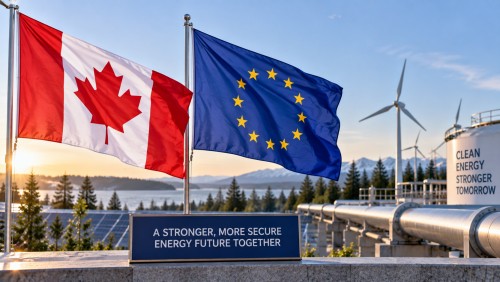
In a significant move towards bolstering energy security, Canada and the European Union are contemplating a closer partnership that could reduce Europe’s dependence on Russian energy supplies. This potential collaboration may pave the way for Europe to access Canadian energy resources, which could be critical in stabilizing the region’s energy market.
During a recent visit to Strasbourg, Canadian Prime Minister Mark Carney engaged in discussions with EU leaders about strengthening economic and strategic ties between Canada and the EU. The discussions centered around Canada’s abundant oil and natural gas resources, which, while currently routed through the West Coast, could potentially be redirected towards Europe.
A key challenge in this partnership is the lack of infrastructure on Canada’s eastern coast for direct energy exports to Europe. Developing the necessary facilities could take several years, prompting both parties to consider alternative solutions like energy swap agreements. These agreements would allow Canadian energy cargoes initially intended for Asian markets to be swapped with shipments destined for Europe, thus facilitating access without direct transatlantic shipments.
Beyond fossil fuels, the partnership could also extend into the realm of clean energy. Canada has the potential to supply critical minerals essential for Europe’s transition to renewable energy and low-carbon technologies. Such cooperation could significantly support Europe’s clean-energy initiatives, aligning with broader global sustainability goals.
As Canada and the EU explore these avenues, the proposed collaboration underscores a strategic shift towards diversifying energy sources and enhancing economic ties. This development could serve as a blueprint for future international energy cooperation, combining trade in traditional energy resources and critical minerals with an eye towards sustainable development.