
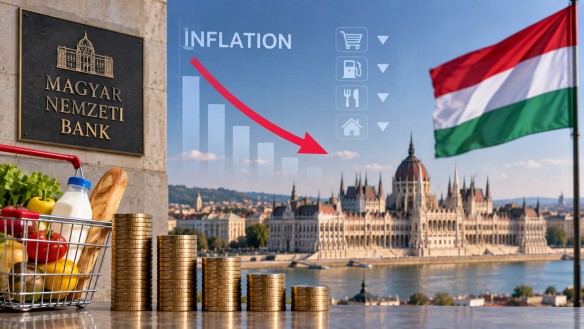
In August, Hungary’s annual inflation rate fell to 1.3%, dipping below both the Hungarian National Bank’s target and market expectations. This marked a slight monthly consumer price increase of 0.2% from July, while core inflation saw a minor rise from 1.9% to 2.0% annually. Analysts had anticipated a 1.4% rise, so the lower figure came as a mild surprise, attributed to factors such as a stronger forint, lower global food prices, and ongoing price caps, which helped temper inflation expectations.
Despite the decrease, some upward price pressures started to surface. The cost of fuel and services showed an increase, and the weaker forint led to higher prices for durable consumer goods and fuel. On the other hand, food prices experienced a decline, and clothing prices dropped in accordance with seasonal trends. Economists predict that inflation will gradually climb throughout the remainder of the year. ING Bank projects that annual inflation might slightly exceed 2% by December, while the average inflation for the year could hover between 1.7% and 1.8%.
The recent inflation figures could potentially provide the Hungarian central bank the leeway to further reduce interest rates. ING Bank anticipates that the key rate, currently at 5.5%, might be lowered to 5% by year’s end. However, this course of action could be postponed due to concerns about the forint’s weakness, rising energy prices, global market fluctuations, and geopolitical uncertainties. Erste Bank suggests that the central bank may retain its inflation target in the upcoming September meeting, which could pave the way for additional monetary easing.
Nevertheless, the Monetary Council might exercise caution in its rate-cutting strategy, especially in light of global bond market unpredictability and geopolitical tensions. Additionally, analysts have sounded alarms over potential inflation acceleration later in the year, driven by increased fuel costs and possible food price hikes linked to drought conditions. Yet, factors like slower wage growth and limited price-raising plans by companies may help mitigate broader inflationary pressures, keeping them in check for the time being.