
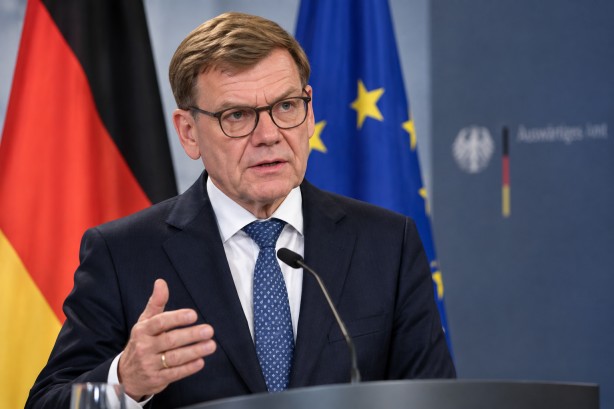
The strengthening of German-Hungarian relations could have significant implications for European energy policy and economic cooperation. During a visit to Budapest, German Foreign Minister Johann Wadephul underscored the importance of diversifying energy sources away from Russian dependency, reflecting a broader European strategy to enhance energy security.
In discussions with Hungarian officials, Wadephul praised Hungary’s ongoing rule-of-law reforms and addressed the country’s access to European Union funds. These talks are part of a concerted effort to expand cooperation within the EU, a move that could influence the bloc’s overall cohesiveness and policy direction.
Economic ties between Germany and Hungary were also a focal point of the visit, as Wadephul met with Hungary’s Minister of Economy and Energy. They engaged with leading German companies operating in Hungary, such as Mercedes-Benz, Siemens, Audi Hungaria, BMW, E.ON Hungária, and Magyar Telekom. These discussions emphasized the potential for deepening economic collaboration, particularly in areas like infrastructure, communications, and the automotive sector.
The bilateral talks also covered European security issues and Germany’s stance towards Russia, reflecting ongoing concerns about stability in the region. Both countries are keen on enhancing their diplomatic and economic partnerships, which could lead to a more robust presence of German enterprises in Hungary.
This visit marks a pivotal step as Berlin and Budapest seek to reset and strengthen their bilateral relations, with a clear focus on economic and European policy cooperation. The outcomes of these discussions may well influence the future dynamics of European integration and economic strategies.