
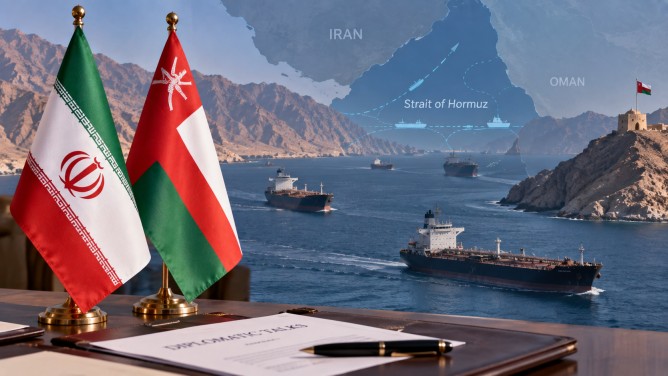
A critical meeting aimed at redefining shipping protocols through the Strait of Hormuz, involving Iran, Oman, and other Gulf countries, has been delayed indefinitely. Initially slated for Muscat, the discussions were to focus on regional security and a new Iran-Oman strategy for overseeing commercial shipping in this vital maritime corridor. The decision to postpone, according to Oman’s Foreign Minister Badr Albusaidi, was a strategic move to ensure consensus among the involved parties. Iran corroborated this, stating that the delay was a mutual decision with Oman, following requests from several regional nations.
The rescheduling of the talks comes on the heels of an incident involving an Iranian commercial vessel near Qeshm Island. Reports indicate the vessel was struck, resulting in one fatality and injuries to four crew members. Iranian state media described an attack involving a projectile, which led to a fire and prompted an evacuation of the crew. Despite these challenges, Iran and Oman have been in discussions about alternative shipping routes through the Strait. The proposed plan suggests that vessels entering the Persian Gulf would navigate through Iranian waters, while those exiting would use both Iranian and Omani waters.
Iran has emphasized that any reopening of the Strait hinges on meeting its specific conditions, with officials hinting at the possibility of imposing fees on vessels using the suggested routes. The Strait of Hormuz remains a crucial channel for oil shipments, and the ongoing disruptions have significant implications for global energy markets, as commercial traffic continues to face considerable reductions.
Compounding the complexities, Saudi Arabia has reportedly expressed a desire for adjustments to the Iran-Oman proposal, and Bahrain has chosen not to participate in the meeting. The broader diplomatic tensions in the Gulf are contributing to increased uncertainty around the Strait, which in turn has driven oil prices higher. Brent crude prices have soared past $100 a barrel amid the escalating regional instability.
In a parallel development, Saudi Arabia has kept its 1,200-kilometer East-West oil pipeline closed following drone attacks, cutting off a key alternative route for transporting crude to the Red Sea. This prolonged shutdown poses a significant risk to the global oil supply, further exacerbating the market disruptions caused by the reduced shipping through the Strait of Hormuz.