
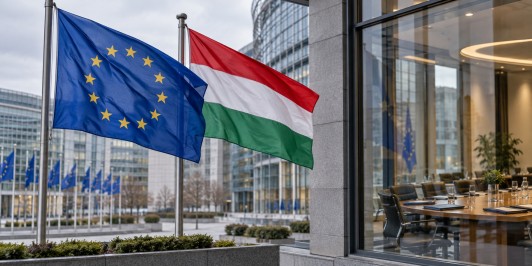
The European Commission has proposed the release of €4.2 billion in frozen cohesion funds to Hungary, following the country’s efforts to address rule-of-law concerns that impact the EU budget. This decision also includes restoring full access to the Erasmus+ and Horizon Europe programs for Hungarian students and researchers, a move that underscores the Commission’s acknowledgment of Hungary’s reforms in public procurement, anti-corruption measures, conflicts of interest, and prosecutorial effectiveness.
While the proposal marks significant progress, it is not yet final. The Council of the European Union must approve the proposal within a month for the funding restrictions to be lifted. Until such approval is granted, the current restrictions remain in place, leaving Hungary partly without access to the EU funds.
It’s important to note that the €4.2 billion represents only a portion of the EU funds that are still restricted for Hungary. Other cohesion funds remain blocked under separate conditions, and Hungary’s access to recovery funds is subject to an ongoing assessment process. These complexities highlight the multifaceted nature of EU-Hungary financial relations and the layered approach the EU is taking in response to rule-of-law issues.
The European Commission’s proposal reflects a cautious yet optimistic step towards resolving ongoing disputes with Hungary. By potentially unlocking these funds, the EU is signaling its readiness to support member states that demonstrate concrete reforms, even as broader financial and rule-of-law assessments continue.