
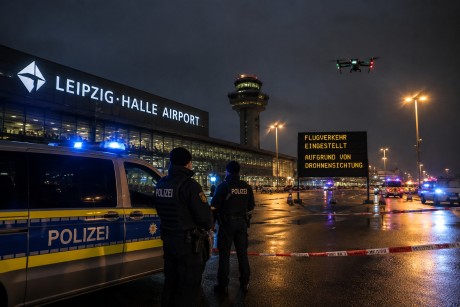
Germany has leveled accusations against Russia, claiming it orchestrated a drone attack at Leipzig/Halle Airport, marking a concerning escalation in a series of hybrid threats aimed at destabilizing the nation. Interior Minister Alexander Dobrindt and Foreign Minister Johann Wadephul revealed that investigators uncovered evidence suggesting the Russian state supplied both the technology and expertise necessary for the attack. It is alleged that operatives at a lower level were recruited to execute the plot.
The incident, which occurred on August 4, involved a drone equipped with explosives that was found within the airport’s security perimeter, near a Ukrainian Antonov cargo plane tasked with transporting weapons to Ukraine. Although the explosive device did not detonate, German authorities warned it had the potential for significant destruction. Subsequent investigations uncovered traces of the military explosive hexogen near the site, along with another drone, initially leading authorities to suspect the involvement of a second drone in the attack, a theory that is now under review.
In response to these developments, Germany has announced a series of measures targeting Russia. These include the imposition of additional sanctions, stricter entry controls for Russian nationals, and new restrictions aimed at individuals with ties to Russian activities. Measures will also be taken against Russia’s so-called shadow fleet, utilized for transporting Russian oil and other goods. Additionally, Germany is advocating for a new European Union sanctions package that targets more Russian-linked entities.
Foreign Minister Wadephul emphasized that Germany is not at war with Russia, yet finds itself increasingly subjected to hybrid warfare tactics, including sabotage attempts, disinformation campaigns, and other destabilizing actions. In solidarity, Germany’s European and NATO allies have expressed support, with European leaders underscoring the need for a united response to these threats, which they perceive as part of a mounting hybrid challenge posed by Russia.
Russian President Vladimir Putin has dismissed the accusations and criticized the planned sanctions, arguing they are counterproductive for Germany. Meanwhile, the German government has communicated its findings and intended actions to NATO and European partners. NATO Secretary General Mark Rutte acknowledged Germany’s evidence suggesting Moscow’s involvement, while European Commission President Ursula von der Leyen assured continued backing for Germany. The incident at Leipzig signifies a further decline in German-Russian relations, already strained by Russia’s aggressive actions in Ukraine. German officials and security experts caution that this event may be indicative of a broader pattern of Russian-linked activities across Europe, encompassing sabotage, drone incursions, and other security threats, with investigations underway in various European nations to explore potential connections.