
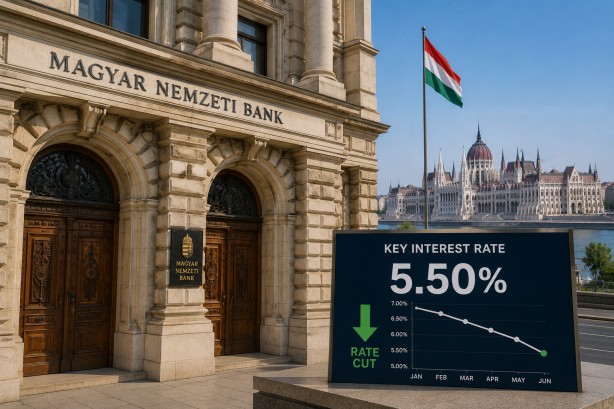
Hungary’s central bank has pressed on with its monetary easing strategy, reducing the key interest rate by 25 basis points to 5.50% as of Tuesday. This marks the third time this year that the rate has been cut by a quarter of a percentage point, achieving its lowest level since April 2022. The decision was made against a backdrop of declining inflation, which dropped to 1.2% in July. Core inflation also saw a decrease, falling to 1.9%.
In addition to the key interest rate cut, the Monetary Council adjusted the interest rate corridor by reducing both ends by 25 basis points. This adjustment brings the overnight deposit rate to 4.50% and the overnight lending rate to 6.50%. These changes reflect the central bank’s response to current economic conditions, notably the easing inflationary pressures.
The central bank anticipates that inflation will remain below its 3% target throughout the rest of the year and continue to do so into 2027. It is projected to return sustainably to the target rate by the first half of 2028. This outlook will guide future rate decisions, with the central bank closely monitoring developments in inflation, exchange-rate stability, and global economic risks.
Hungary’s economy experienced a year-on-year growth of 1.7% in the second quarter, buoyed by robust performances in the services sector and industrial output. However, challenging drought conditions have negatively impacted agricultural productivity. These economic indicators will play a crucial role in shaping the central bank’s monetary policy moving forward.
Looking ahead, the central bank has stated that its future monetary policy decisions will hinge on several factors, including inflation trends, the stability of the exchange rate, and broader global economic risks such as geopolitical tensions and high energy prices. These elements will continue to influence the bank’s approach as it navigates the complex economic landscape.