
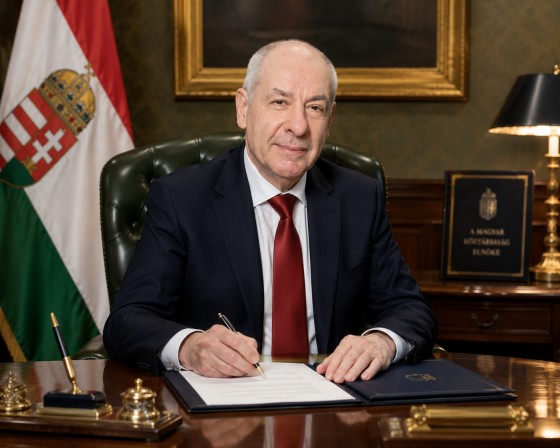
In a recent podcast appearance, former Hungarian President János Áder has voiced strong opposition to a proposed legislative change aimed at removing President Tamás Sulyok from office. Áder labeled the move a “constitutional coup,” emphasizing that it contravenes Hungary’s constitutional framework. He firmly stated that political disagreements should not serve as a basis for legal proceedings against the president. Áder highlighted that, according to the nation’s constitution, a president’s removal is contingent upon an impeachment process that necessitates a two-thirds majority in parliament and evidence of constitutional or legal breaches.
The controversial proposal, known as the 17th amendment to Hungary’s Fundamental Law, seeks to mandate Sulyok’s immediate departure once the amendment is enacted. Áder argues that this course of action circumvents the constitutional impeachment protocol, effectively enacting unconstitutional retroactive legislation. He categorically dismissed the claims that Sulyok’s responses to certain political issues were inadequate, arguing that such criticisms are of a political nature and do not constitute legal breaches warranting his removal.
Áder issued a cautionary note on the potential ramifications of ousting a president through a constitutional amendment rather than following the established legal framework. He warned that doing so would compromise the presidency’s legitimacy and erode the rule of law. In his view, any successor appointed under these circumstances would face significant challenges regarding their constitutional legitimacy and their capacity to symbolize national unity.
This development underscores a pivotal moment in Hungary’s political landscape, where constitutional integrity and the balance of political power are being tested. Áder’s remarks bring attention to the importance of adhering to constitutional norms and processes in maintaining the stability and credibility of the country’s governance. As Hungary navigates this contentious issue, the implications of any legislative changes on its democratic institutions remain closely scrutinized.