
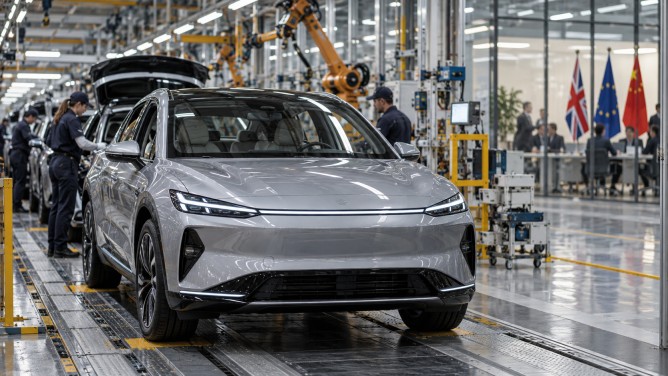
The United Kingdom is weighing the possibility of imposing tariffs on Chinese electric vehicles as it explores joining the European Union’s Made in Europe initiative, a move that could bolster British manufacturing ties with the EU while potentially heightening trade tensions with China. This development comes as the EU works on its Industrial Accelerator Act, which aims to support European manufacturers by favoring locally produced goods and addressing the competition posed by subsidized imports.
The proposed act, backed by France and Germany, may require the UK to align with EU trade defense measures, including implementing tariffs on Chinese electric vehicles starting in 2024. British officials have indicated that negotiations are still in preliminary stages and emphasized that the UK will continue to maintain its independent trade policy. Meanwhile, China has voiced opposition to the potential restrictions, cautioning that such tariffs could undermine free trade principles and harm UK-China economic relations.
For the British automotive industry, which is heavily reliant on exports and European supply chains, participation in the EU’s initiative could provide a competitive edge. However, the introduction of tariffs could lead to increased vehicle prices and provoke retaliatory measures from Beijing, affecting the broader trade relationship with China.
The EU is expected to move forward with the Industrial Accelerator Act by late 2026 or early 2027. As the UK considers its position, negotiations regarding British participation and any resulting trade obligations remain ongoing. The outcome of these discussions could have significant implications for both British manufacturers and international trade dynamics.