
European lawmakers have formally halted the US trade agreement ratification, challenging President Trump’s attempt to condition tariff policy on European support for his Greenland ambitions. The suspension marks Brussels’ strongest material response to what multiple European leaders have openly described as economic blackmail.
Bernd Lange, who heads the European Parliament’s trade committee, articulated clear conditions for resuming negotiations, stating that Greenland-related threats must completely cease before compromise becomes possible. The frozen agreement would have granted American industrial exporters zero-tariff access to European markets.
The European Union has preserved its $750 billion energy purchase commitment, which officials confirm operates separately from the suspended trade agreement. This strategic distinction allows Brussels to maintain energy security cooperation while defending against political coercion.
Diplomatic relations deteriorated visibly when European Commission President Ursula von der Leyen changed her schedule after addressing parliament. She skipped a potential Davos meeting with Trump, returning instead to Brussels to coordinate emergency summit preparations for Thursday evening.
Meanwhile, European trade policy faced additional complications when parliament voted by a narrow 10-vote margin to refer the Mercosur trade deal with Latin American countries to the European Court of Justice. Lange condemned this decision, as did the European Commission and German Chancellor Friedrich Merz. While the Commission could provisionally implement the Mercosur agreement as it did with the Brexit deal, Lange warned this would plunge the bloc into “huge institutional conflict.” The crisis summit will primarily address US relations, including potential activation of €93 billion in counter-tariffs and an unprecedented anti-coercion mechanism.
Institutional Conflict Looms Over Separate Mercosur Trade Decision
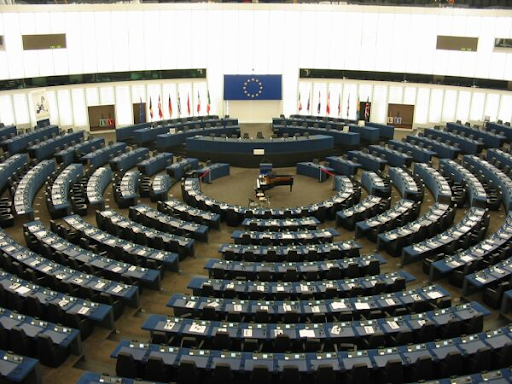
Photo by Cédric Puisney, via wikimedia commons
9